

Primary 3 Science Tuition at Science Studios
This programme is designed for Primary 3 students who are ready to learn Science through clear explanations, hands-on experiments and structured activities. Lessons are aligned with the MOE Primary Science syllabus while also encouraging students to explore scientific ideas beyond the syllabus.
Students learn to understand how the world around them works, ask meaningful questions, think logically and develop the confidence to investigate their own ideas. Through experiments and guided learning, we help students build a strong foundation in Science and deepen their understanding of the natural world.
What Students Learn in Primary 3 Science?
Course of study:
=> Living things: Animals
=> Living things: Plants, Fungi and Bacteria
=> Non-living things: Materials
=> Life Cycle of animals and plants
=> Magnets, Magnetic materials and Magnetic force
=> Classification | Reading charts and graphs | Process Skills | Stepping stones - CER Science explanation with evidence answering techniques | Keywords for different Topics and Concepts
Your child will learn to:
understand key Primary 3 Science concepts;
make accurate observations during experiments;
identify patterns and draw conclusions from evidence;
explain scientific ideas clearly using appropriate Science terms; and
apply scientific reasoning when answering questions.
What makes Science Studios different?
Our Primary Science Syllabus
Our classes complement the MOE Science syllabus by combining:
Interactive experiments
E-learning
Higher-order exam-based questions
Opportunities to strengthen key scientific concepts and keywords use
Our Science Experiment Lab
Our learning studios at 3 locations are equipped with state-of-the-art technology and thoughtfully designed learning environments that enhance engagement and understanding.
Science Studios also features a dedicated experiment area, fully equipped with scientific apparatus and resources for hands-on experiments and activities.
Our Science Classes
At Science Studios, students are guided to:
i) Explore and discover scientific concepts through hands-on experiments
ii) Apply their knowledge and express creativity through mini-projects and competitions
iii) Challenge themselves with higher-order thinking and exam-based questions
iv) Deepen their understanding with relevant scientific knowledge beyond the syllabus
Hands-On Science Experiments
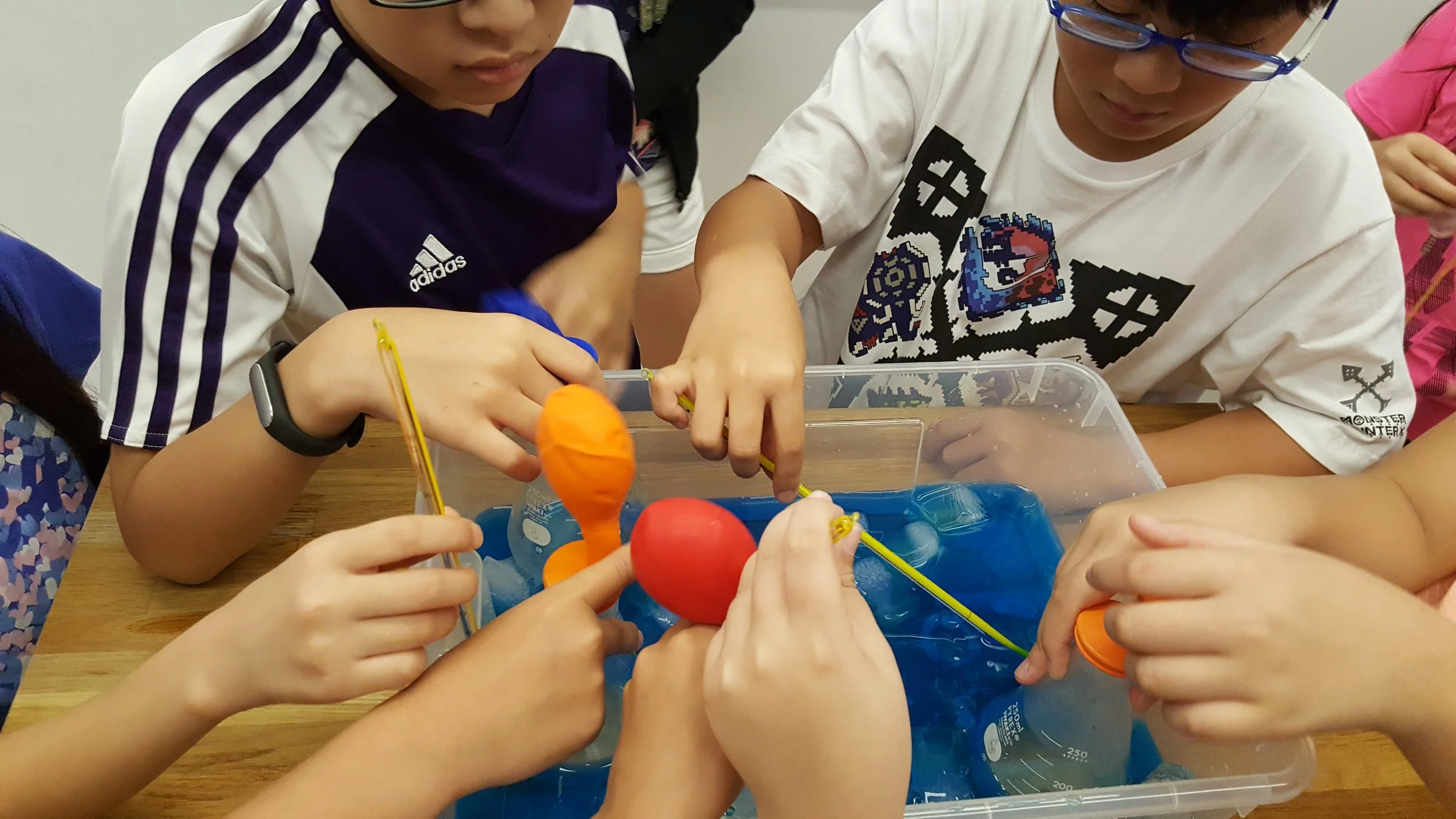
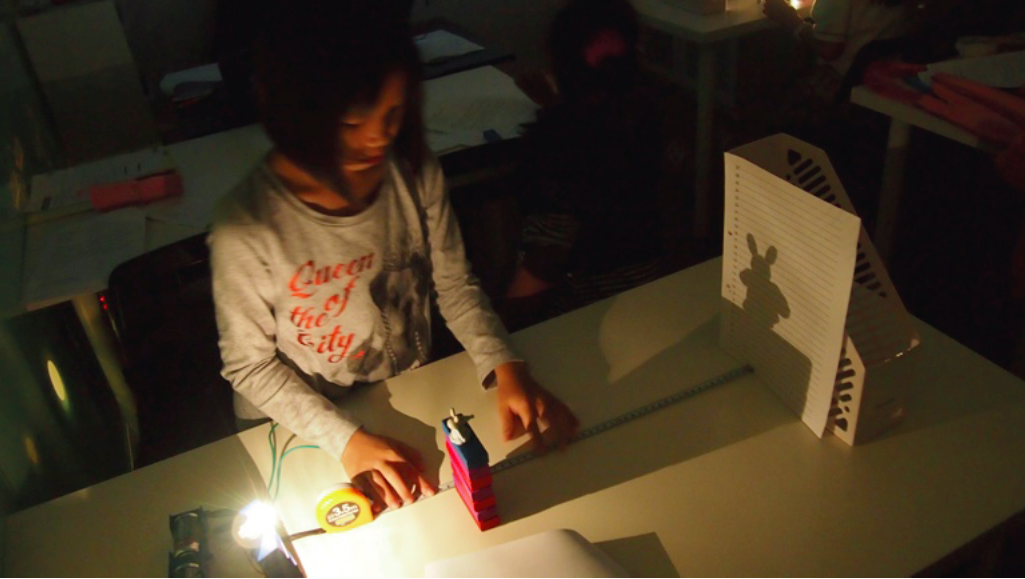
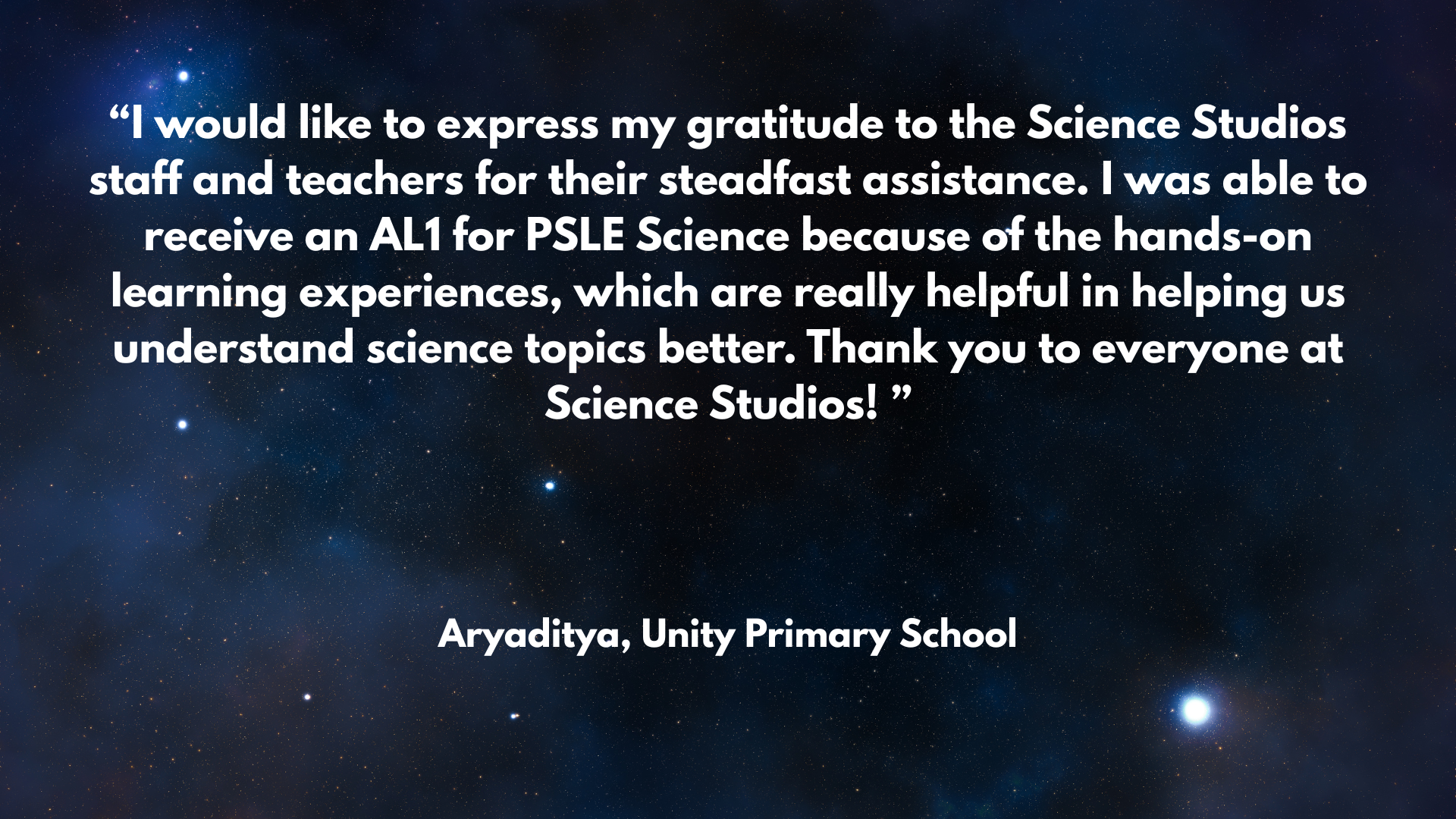
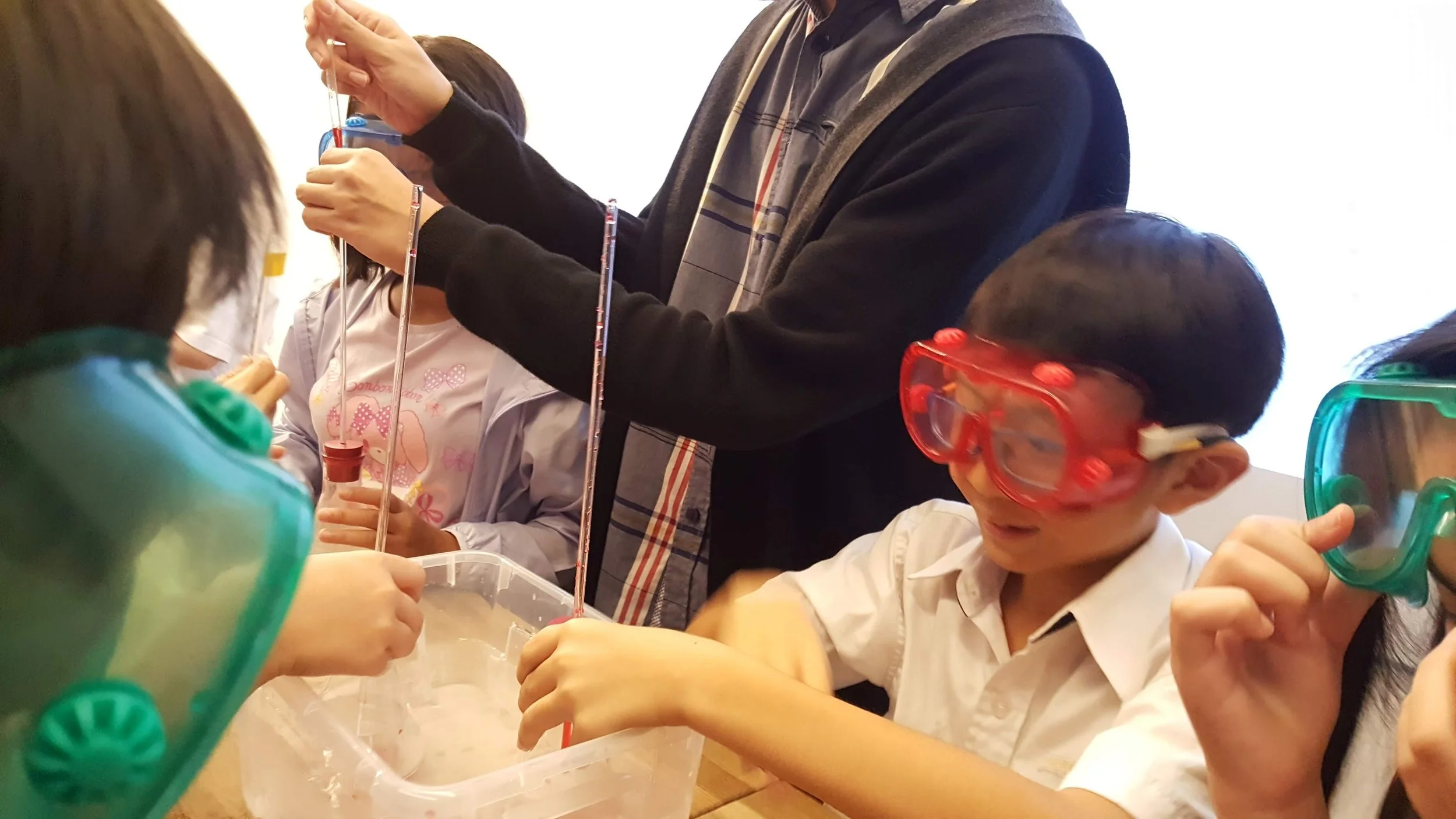
Our hands-on experiments help students visualise scientific concepts and observe Science happening in front of them. These practical experiences also give students a useful visual reference when approaching questions, helping them understand what is being tested and what to focus on when constructing their answers.
During experiments, students strengthen important Science process skills, such as identifying variables, making observations and interpreting results. They also learn how to state the aim of an experiment and draw conclusions based on the evidence collected.


How to build Strong Science Answering Skills?
We use stepping stones as a clear and effective science learning strategy to help students understand how to write comprehensive, accurate, and well-structured answers to science questions.
The stepping stones guide students through the key stages of making scientific claims, identifying relevant evidence, using scientific reasoning, and applying the correct scientific keywords following the claim-evidence-reasoning approach (CER).
This step-by-step method supports critical thinking, scientific reasoning, evidence-based answers, exam preparation, and science question-solving skills, helping students move from identifying what a question is asking to selecting appropriate evidence and explaining why that evidence supports their conclusion.
Ultimately, stepping stones provide a practical framework for producing clear, detailed, logical, and scientifically correct answers, while improving students’ ability to communicate scientific ideas confidently and achieve better results in science assessments and examinations.
Small-Group Science Tuition
Science Tuition Classes at Science Studios are smaller than typical school classes. Depending on the classroom setting and type of class, class sizes range from 4 to 16 students. Lessons are conducted in a tutorial-based format. Teachers actively involve students by asking questions, checking their understanding and ensuring that no student is left behind. During hands-on experiments, students usually work in groups of four. A co-tutor supports the class alongside the main tutor when needed, allowing each group to receive guidance while the tutor oversees the learning and progress of the whole class.
Each lesson is carefully structured to combine comprehensive Science worksheets, guided activities and hands-on experiments. Students apply what they have learnt while developing their understanding of key scientific concepts, scientific reasoning, problem-solving skills and critical thinking.
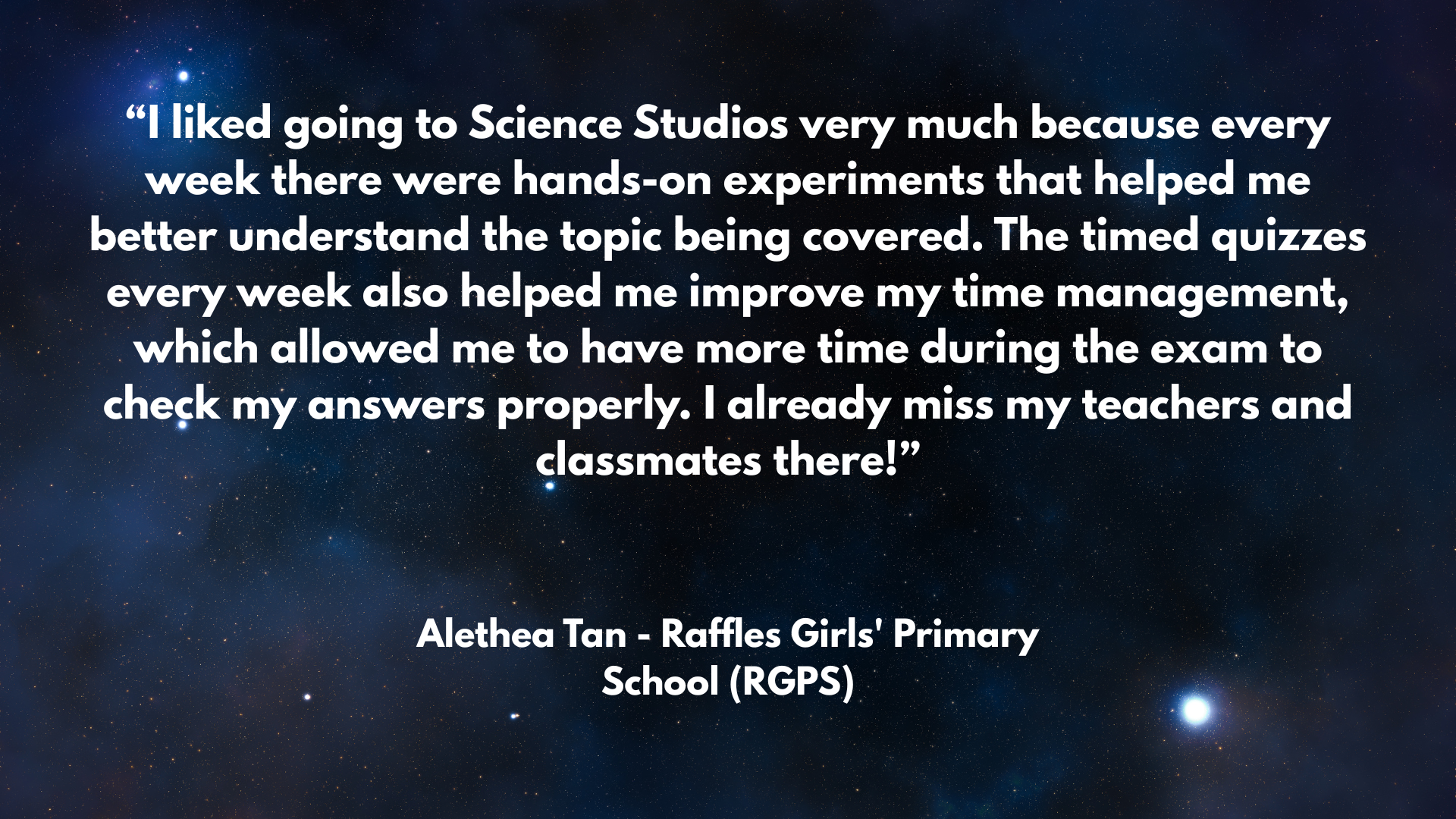
Each class concludes with a Science quiz or knowledge assessment to check students’ understanding, identify areas for improvement and monitor their progress. This combination of small-group teaching, experiments, structured practice and regular assessment helps students build confidence and develop the skills needed to answer Science questions accurately and effectively.
SCIENCE TUITION CLASSES AT CENTRAL | NEWTON
SCIENCE TUITION CLASSES AT WEST | BUKIT TIMAH
SCIENCE TUITION CLASSES AT EAST COAST | MARINE PARADE
About Our Science Curriculum and Science Tutors
Science Studios’ learning experience is designed by Mr Ephrem Chong, drawing on his years of teaching experience in MOE schools and the Gifted Education Programme. He currently leads our Curriculum and Teacher Training team.
All our teachers are carefully trained, have strong backgrounds in Science, and build good rapport with their students. They guide students in strengthening their understanding of scientific concepts, improving their answering techniques and achieving better results in Science.
Our teachers come from a wide range of scientific fields and bring different areas of knowledge and experience into the classroom. They are passionate about sharing this knowledge with students and helping them develop a deeper understanding of, and interest in, Science.